Jim Clarke’s article on almond milk in the Middle Ages, mentions that, “During Lent, European Christians were barred from consuming milk, as well as eggs and meat.” Today, it doesn’t seem too difficult to give up all animal products because many substitutes were made to make it more manageable. However, through the 5th and 14th centuries they had to envision how to make butter, desserts and cheeses without the usual dairy milk. That is how the upper class in the Middle Ages began to rely on almond milk. Consequently, almond milk has been used for centuries and was considered a delicacy to many. Today its popularity is increasing and has caused disruptions in the economy and the business world.
Almond milk dates further back than most people realize. It originated in Salerno, Italy during the 12th century. Surprisingly, it was first mentioned in the medical world because it had healing properties. It then traveled to the Middle East, where it appeared in cookbooks. According to an article titled A Brief History of Plant Milks, almond milk appeared in both Baghdadi and Egyptian recipes in the 13th and 14th century. (Powell)
Unlike today, where Christians stray away from meat on Fridays throughout Lent, during the Middle Ages they were forbidden from eating any animal products during the Easter season. Therefore, during some holidays, almond milk was used as an alternative to cow’s milk. For the same reason, almond milk was also used during Ramadan. But it seems that milk wasn’t just used during the holidays, “But the sheer number of recipes from the Middle Ages that use almond milk, particularly those that combine it with (decidedly un-Lenten) meat, makes it clear that chefs came to regard it as a staple instead of just an alternative ingredient.” (Clarke) Almond milk was preferable to cow’s milk because it was easier to dye. Dyeing foods and dishes gave meals a bit of whimsy and the rich admired colorful cuisine. The rich felt entitled to the access of almond milk before anybody else because it was an elegant beverage and fairly difficult to make. Many people believed it was easier to digest than regular cow’s milk and just like it was in the 12th century, was still considered to have medicinal properties. For that reason, it was also reserved for the sick.
The United States was first introduced to almond milk around the 19th century, when it was brought to California. Since then it has made a name for itself and has become beloved in America. Ordinarily, it is used by people who are lactose intolerant, meaning they don’t drink milk, and it is also bought by those who abstain from animal products. However, almond milk has become so popular that it has caused controversy between dairy farmers and milk producers. Moreover, some dairy farmers don’t believe almond milk should sit on the shelf next to cow’s milk. They don’t think it should be called milk because it misleads customers, since almond milk and other plant milks don’t have the same properties as cow’s milk. The New York Times reveals that, “Americans drink 37 percent less milk today than they did in 1970, according to the Department of Agriculture. Dairy milk sales tumbled to $12 billion last year, down 20 percent from $15 billion in 2011” (O’Connor). Some companies have even been asked to supply the customers with almond milk so they can put it in their coffee and other foods.
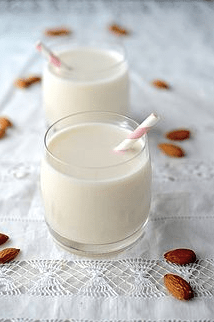
No matter what you call it, almond milk has become a staple for many people. It is easily digested and doesn’t contain any animal products; throughout history, it has been used in recipes for the rich and in medicines for the sick. Dairy farmers may want plant milk to be moved out of the dairy aisle, but it definitely won’t be moved off the shelf any time soon. Almond milk has too much of an impact on Americans and the world. As Jim Clarke explains, “For a long time, the almond has been a little nut that’s provoked great expectations.”
Works Cited
Clarke, Jim. “In the Middle Ages, the Upper Class Went Nuts for Almond Milk.” Atlas
Obscura, Atlas Obscura, 22 Dec. 2017,
https://www.atlasobscura.com/articles/almond-milk-obsession-origins-middle-ages.
O’connor, Anahad. “Got Almond Milk? Dairy Farms Protest Milk Label on Nondairy Drinks.”
The New York Times, The New York Times, 13 Feb. 2017,
https://www.nytimes.com/2017/02/13/well/eat/got-almond-milk-dairy-farms-protest-milk
-label-on-nondairy-drinks.html.
Veronika. “A Brief History of Plant Milks.”Viva! Health, 11 Oct. 2019,
https://www.vivahealth.org.uk/healthfeatures/brief-history-plant-milks
#almondmilk #dairyfree #wherediditcomefrom #whomadethat #vegan #fantasticfeastsblog
 Fantastic Feasts and Where to Find Them